
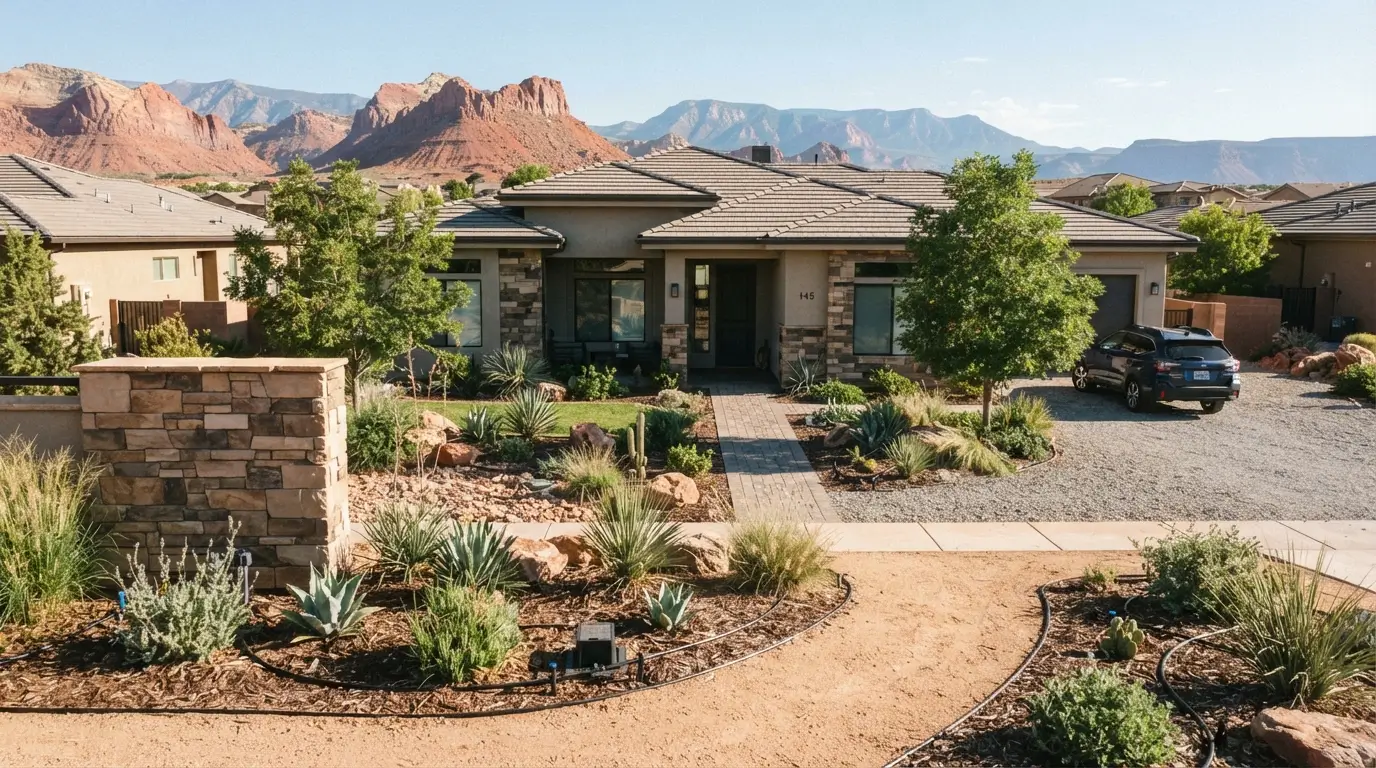
In a desert city, the front yard is rarely just a front yard. It’s the largest swing in the summer water bill, a candidate for a cash rebate, and a source of lease questions about who waters, who repairs, and who pays. Washington County is Utah’s most arid county, and 2026 brought a statewide drought declaration. Owners who settle these questions in advance avoid disputes and high bills later.
Key Takeaways
- Washington County is Utah’s most arid county, and the Washington County Water Conservancy District expects 2026 to be one of the driest years on record for the region.
- St. George limited culinary water irrigation to 8 p.m. to 10 a.m. from June 1 to September 1, according to a KSL review of local rules.
- The district pays property owners up to $3 per square foot to convert grass, but only owners of record can apply, and starting before approval makes a project ineligible.
- The rebate requires a conservation easement that runs with the land, restricting grass, sprinklers, and water features in the converted area permanently.
- Put irrigation, water billing, leak reporting, and landscape changes in the lease.
Why Water Is a Rental Issue Here
The Washington County Water Conservancy District says 2026 will go down as one of the driest years on record for the region. The district says nearly 4 million square feet of grass have been converted since December 2022, saving more than 164 million gallons annually. In the St. George area, water is both a cost and a public priority. The region’s conservation plan lists increasing block tiered water rates and seasonal watering schedules among its programs, which means heavy outdoor use costs more per gallon, and a neglected irrigation leak can show up quickly on a bill.
Know the Rules Before You Set the Schedule
Governor Cox’s drought order declared a statewide emergency, but KSL reported that it did not create one uniform set of watering rules, since cities and water providers set their own. KSL’s review lists St. George as limiting outdoor irrigation with culinary water to 8 p.m. to 10 a.m. from June 1 to September 1. Because these rules can change as supply shifts, check the city’s water conservation page before each season and put the current window in your tenant materials. The Utah Division of Water Resources also encourages fixing broken sprinkler heads and leaks, which is exactly the kind of small repair that can slip when no one owns it.
The Rebates: What Owners Can Claim, and What They Can’t Undo
The district’s Water Efficient Landscape Program pays property owners to replace grass. Under a temporary increase, the district pays $3 per square foot on the first 1,000 square feet and $2 after that, so a typical 1,400 square foot project would earn about $3,800. Confirm current rates and deadlines with the district before you plan around them. The conditions matter for landlords. The applicant must be the property owner of record or an authorized representative, the district must complete a pre-conversion inspection and authorize the project before work starts, the grass must be living and maintained, and any remaining grass beside the converted area must be at least 8 feet wide.
Then there’s the easement. Payment is subject to a conservation easement that restricts grass, sprinklers, and water bodies in the converted area in perpetuity, and transferring the property before the easement is recorded forfeits payment. The district’s FAQ explains that the easement runs with the land, so every future owner must abide by it, though it doesn’t prohibit common landscape changes. If you might sell a rental, weigh that permanence before converting. The district also offers up to $100 for an eligible WaterSense smart controller, and a $100 treebate for each qualifying tree planted.
Who Pays for Water: Settle It in the Lease
There’s no single right answer, but there is a wrong one: leaving it unstated. Most owners choose one of three structures. In the first, the tenant holds the water account and pays all usage, which encourages conservation but can leave a yard to die if the tenant under-waters. In the second, the owner pays irrigation, often through a separate meter or a flat arrangement, which keeps control over the landscape but exposes the owner to waste. In the third, the tenant pays indoor use while the owner handles irrigation repairs and controller settings, and sets expectations for the rest. Whichever you choose, write down who holds the account, who pays for outdoor use, and what happens when a bill spikes. If you offer furnished winter stays, where utilities are often bundled into the rent, our guide to furnished snowbird rentals covers strategies for that market.
What to Put in the Lease Addendum
- Watering rules: The current city window and schedule, with a note that it can change.
- Landscape changes: No planting turf, removing mulch, or altering irrigation without written consent, especially in any area that has received a rebate.
- Leak reporting: Prompt reports of broken sprinkler heads, running toilets, wet spots, and high-usage notices.
- Controller settings: Who adjusts the irrigation controller, and whether tenants may change the schedule.
- Repairs and upkeep: What the owner repairs, such as drip lines and controllers, and what the tenant maintains, such as weeding and trimming.
A tenant who removes grass on their own can also jeopardize an owner’s rebate, since a project begun before approval is ineligible.
Make It Easy to Do the Right Thing
A smart controller, a drip system, and clear instructions do more than lease language. Document the yard with photos at every move-in and move-out, and walk the irrigation before each summer. Our maintenance program includes detailed move-in and move-out inspections with full condition documentation, and our ROI calculator can help you weigh a landscape conversion against its cost and payback.
FAQ
- No. The district’s agreement requires the applicant to be the property owner of record or an authorized representative.
- Payment is subject to a conservation easement, and transferring the property before the easement is recorded forfeits the payment.
- A KSL review lists culinary water irrigation as limited to 8 p.m. to 10 a.m. from June 1 to September 1. Rules can change, so confirm with the city.
- Yes. The easement runs with the land, though it doesn’t prohibit common landscape changes.
Plan the Yard Like You Plan the Lease
Water-wise rentals work best when the landscape, the irrigation, and the lease all say the same thing.
Want your yard, irrigation, and lease working together?
If you’d rather have someone coordinating the checks, vendors, and tenant communication across your portfolio, our St. George property management team can help.
St. George property management